
ArabnaBook
Connect. Trade. Thrive


Buying a car in the UAE is often described as a simple and fast process. The market is huge, options are everywhere, and in many cases you can complete the transaction in a single day. For newcomers and first-time buyers, this sounds reassuring. But this apparent simplicity hides a reality that many people only discover after they have already spent their money: it is extremely easy to buy the wrong car.
Every year, buyers across the UAE lose thousands of dirhams not because they made one big mistake, but because they made a series of small, avoidable ones. They trusted how the car looked instead of what it had been through. They trusted the seller’s story instead of checking documents and records. They rushed into decisions because the deal “felt good” or because they were afraid someone else would buy the car first.
A car is not a phone or a household appliance. It is a complex mechanical system, a legal asset registered with government authorities, and a long-term financial commitment that will continue to cost you money long after the day you buy it. This guide is written to help you approach the entire process calmly, logically, and safely, even if you have no technical knowledge and no previous experience buying cars in the UAE.

Most bad car purchases begin with the wrong question. People usually ask, “Which car should I buy?” when the more important question is, “What kind of car actually fits my life, my usage, and my budget?”
In the UAE, your daily driving conditions matter more than many people realize. Some people spend most of their time in city traffic. Others drive long distances every day on highways between emirates. Some need space for family and children. Others mostly drive alone. A car that is perfect for one person can be uncomfortable, expensive, or impractical for another.
For example, a large SUV may look impressive and feel safe, but it will usually consume more fuel, cost more to insure, and cost more to maintain. A small sedan may be economical and easy to live with, but it may feel uncomfortable or underpowered for long highway drives or full family trips.
You should also think beyond the purchase price. Ownership costs in the UAE include insurance, registration, fuel, regular servicing, tires, brakes, and unexpected repairs. Many first-time buyers focus only on the price they pay on day one and are surprised later when monthly and yearly costs quietly add up.
A simple rule is this: if a car already stretches your budget before you buy it, it will never feel comfortable to own. Even small repairs will feel painful, and you will always be one problem away from stress.

New cars are attractive for obvious reasons. They come with a warranty, they have no unknown history, and they usually give the owner a sense of security and predictability. In the UAE, dealerships also often offer service packages and financing options that make new cars easy to buy.
However, new cars come with a cost that many buyers underestimate: depreciation. In many cases, a new car can lose a large part of its value in the first one or two years, even if it is in perfect condition. This means you are paying a high price for the comfort of being the first owner.
Used cars, on the other hand, can represent much better financial value. Someone else has already paid the biggest part of the depreciation. But the UAE used car market is very mixed. It includes carefully maintained personal cars, but also ex-rental vehicles, heavily repaired accident cars, and imported cars with unclear or incomplete history.
This is why the real question is not “new versus used”. The real question is “how much risk am I willing to manage in exchange for a lower price?” New cars cost more but are more predictable. Used cars cost less but require much more careful checking.

The UAE has a demanding environment for cars. High temperatures, long highway drives, traffic congestion, and sometimes sand and dust all put stress on engines, cooling systems, gearboxes, and air-conditioning systems.
A car that performs well in a cooler climate may struggle in extreme heat if it was not designed or maintained properly. This is one of the reasons why GCC-spec cars are usually preferred in the region: they are built or configured with stronger cooling systems and components suited to local conditions.
For most buyers, reliability, cooling performance, and comfort in daily use matter far more than engine size or brand image. Luxury and performance cars can be very enjoyable to drive, but outside warranty they can also become very expensive to maintain and repair.
In many cases, a simpler and more common model with good parts availability and many experienced mechanics in the UAE is a smarter long-term choice than a rare or very complex car.
Here is an uncomfortable but important truth: many cars are sold because their owners want to avoid future expenses or problems.
This does not mean that all used cars are bad. Many people sell good cars because they are upgrading, leaving the country, or changing their needs. But statistically, the used car market always contains a higher concentration of cars with hidden issues than the population of cars on the road.
This is why your mindset as a buyer matters so much. You should never assume a used car is good until it proves it. You should assume it might have a story, and your job is to discover that story before you pay for it.
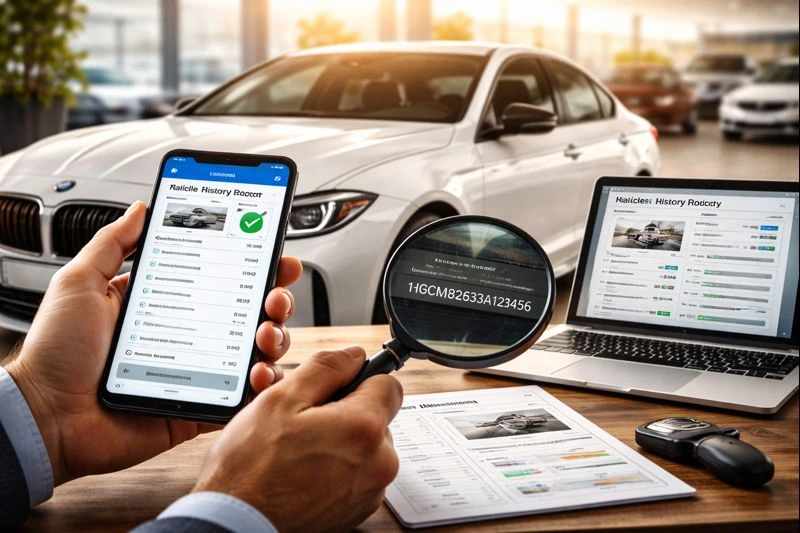
Every car has a VIN (Vehicle Identification Number). This number is like the car’s fingerprint. It allows you to check its recorded history in databases and official systems.
Before you invest time in negotiations or inspections, you should always use the VIN to check for recorded accidents, major damage, mileage inconsistencies, or legal issues. In the UAE, you should also check with the relevant traffic authority systems to make sure the car has no blocks, fines, or registration problems.
If a seller refuses to give you the VIN or makes excuses, this is a very strong warning sign. There is no honest reason to hide it.
Many cars in the UAE are repaired after accidents, especially in cities with heavy traffic. Some of these repairs are done properly and professionally. Others are done only to make the car look good again so it can be sold.
A car with poorly repaired structural damage may still drive, but it can have long-term problems with alignment, tire wear, steering behavior, noise, and, most importantly, safety in a future accident.
This is why you should never trust appearance alone. A shiny car with perfect paint can still be a very bad purchase.
Modern cars are full of complex mechanical and electronic systems. You cannot see internal engine wear, gearbox problems, or hidden electronic faults by simply looking at the car or driving it for a few minutes.
A professional pre-purchase inspection uses experience and tools to check things you cannot check yourself. It often reveals problems that would cost thousands of dirhams to fix later.
Think of the inspection fee not as a cost, but as insurance against buying the wrong car. It is almost always cheaper to pay for an inspection than to discover, a few months later, that you bought someone else’s problem.
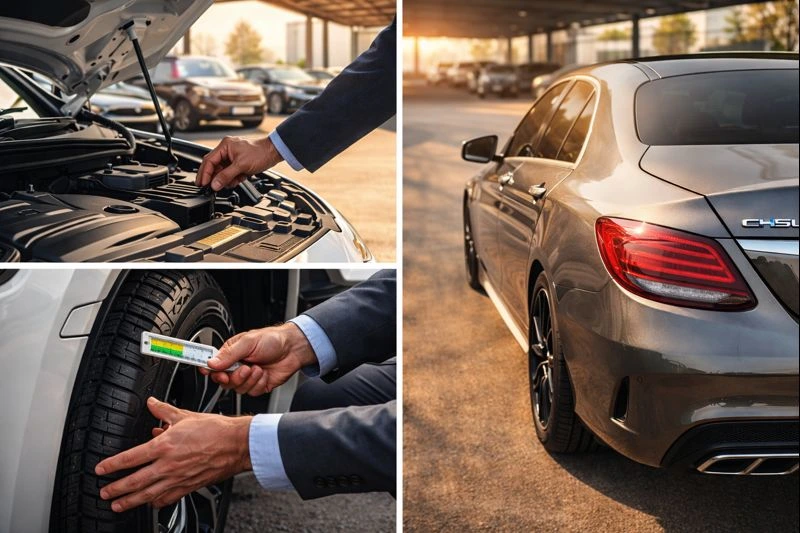
Even if you are not a car expert, you should still pay attention to basic signs. Uneven paint, different shades on body panels, strange gaps between panels, warning lights on the dashboard, or unusual smells and noises are all signals that deserve caution.
A very worn interior in a car that claims to have very low mileage is also a signal. These things do not prove a problem by themselves, but they tell you where to ask more questions and where to be extra careful.
A test drive is not just to see if the car “feels nice”. It is your chance to observe how the car behaves in real conditions.
Ideally, you should start the car when the engine is cold, drive in city traffic, and also drive at highway speed. You should pay attention to how the gearbox shifts, how the brakes feel, how the steering behaves, and whether there are vibrations, noises, or warning lights.
A car that behaves strangely during a test drive rarely becomes better after you buy it.
Many buyers focus too much on mileage. While extremely high mileage can be a concern, low mileage is not always a guarantee of a good car.
Cars that are driven only for very short trips or that sit unused for long periods can develop problems with seals, batteries, cooling systems, and other components. A well-maintained car with higher mileage can often be a better choice than a neglected car with low mileage.
What really matters is how the car was used and how well it was maintained.
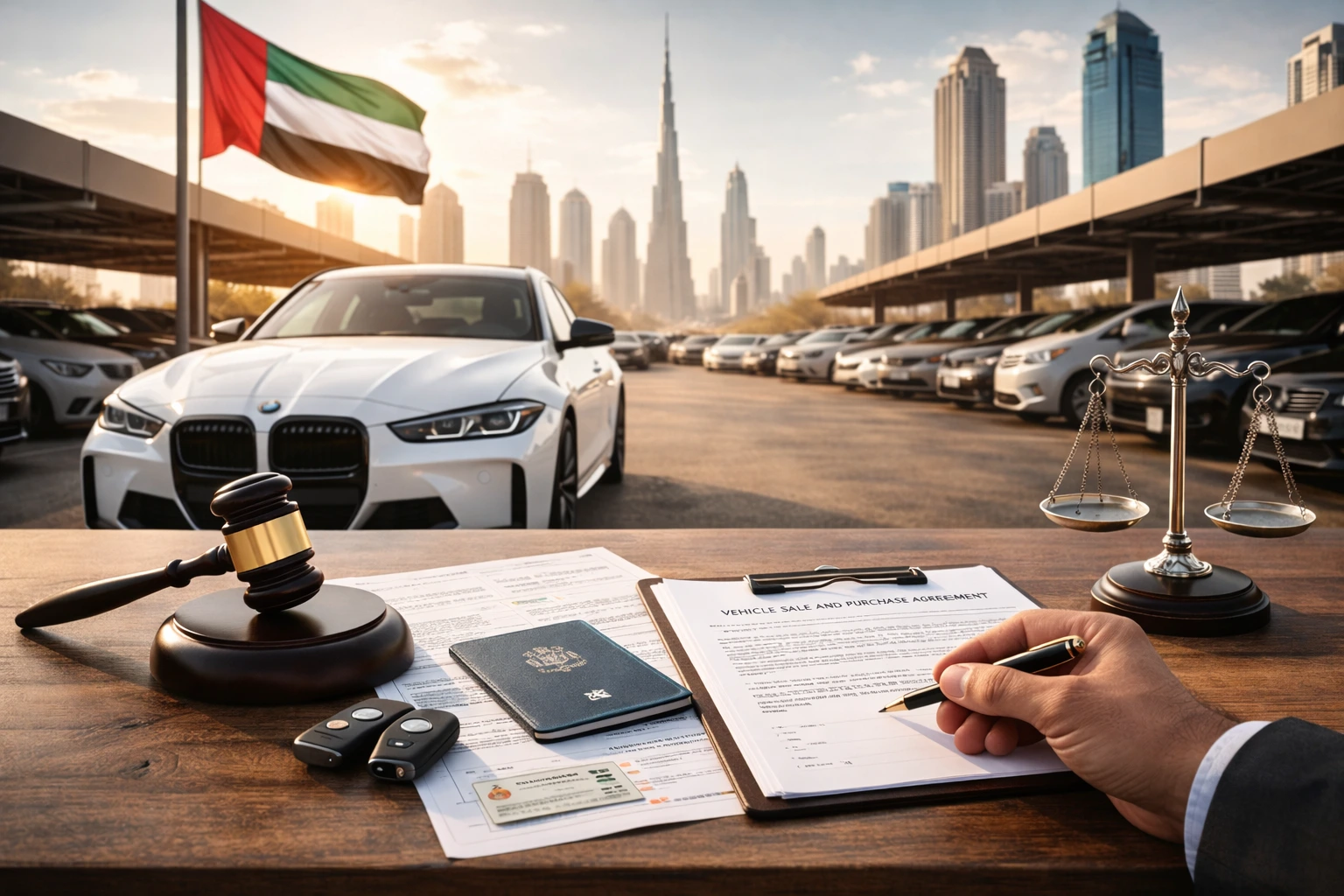
Before paying anything, you must make sure the car can be legally transferred to your name. The seller must be the legal owner, the car must have no unpaid fines or loans, and all documents must match the car’s VIN.
In the UAE, this process is generally straightforward, but you should never assume someone else has checked this for you.
A car’s price should always be compared with similar cars in the market. If one car is much cheaper than everything else, there is usually a reason.
Sometimes that reason is simple and harmless. Very often, it is not. A “great deal” that ignores market reality often becomes an expensive lesson later.
Most bad purchases happen because of pressure, excitement, fear of missing out, or emotional attachment to a specific car.
A strong buyer is someone who is perfectly comfortable walking away, even from a car they like, if something does not feel right or cannot be properly verified.
Buying the right car is only the beginning. Regular servicing, fixing small problems early, and not ignoring warning signs are what keep a car reliable and affordable over time.
Many cars become “expensive cars” not because they were bad, but because they were poorly maintained.
There is no such thing as a perfect car, whether it is new or used. Every vehicle is a complex machine that will eventually require maintenance, repairs, and unexpected expenses, no matter how carefully it is chosen. What separates a good purchase from a bad one is not the absence of problems, but how well the risks were understood and managed before the purchase. A smart buyer does not try to eliminate risk completely, because that is impossible; instead, they focus on reducing uncertainty and choosing a car whose long-term costs and reliability truly fit their life and budget.
.


